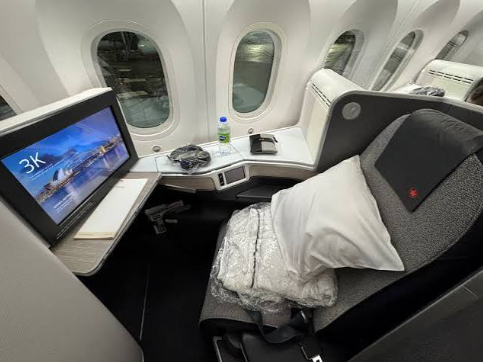
Marcus Rivera had done everything right. He’d checked Google Flights obsessively for three weeks before his São Paulo trip. He’d set fare alerts. He’d tried incognito mode — because someone on Reddit swore it worked. He booked a business class seat on a major U.S. carrier for $7,200 round-trip from New York, feeling mildly victorious. Two days later, a colleague at his firm flew the same route, same week, same cabin, on the same airline — for $4,800. The difference? His colleague had called a consolidator-backed travel advisor instead of trusting an algorithm. That $2,400 gap wasn’t a fluke. It’s a structural feature of how airlines price premium cabins — and the traveling public largely has no idea it exists. Experienced travelers often turn to travelbusinessclass for personalized itineraries and significant savings on business class tickets, precisely because this pricing gap is real, repeatable, and quietly enormous.
This isn’t a loyalty points hack. It’s not about booking at midnight or using a VPN. It’s about a layer of the airline industry’s distribution system that operates entirely outside public booking engines — and has for decades.
Why Airlines Hide Their Best Fares From You
Airlines are yield management machines. Their pricing systems run algorithms designed to extract maximum revenue from each seat, adjusting prices dynamically based on demand, competition, season, and how far out you’re booking. That’s the published fare you see on Expedia, Kayak, or the airline’s own website.
But here’s what those sites don’t show you. Airlines also pre-sell blocks of seats to wholesale intermediaries called consolidators. These are bulk purchases, negotiated at contracted rates well below the public price. The airline moves guaranteed inventory. The consolidator gets exclusive pricing. And by contract, those rates cannot appear on public booking platforms.
This is not a loophole. It’s not a glitch. It’s a deliberate, structural feature of how premium cabin inventory gets distributed. The savings are real: consolidator fares on international business and first class routes routinely run 15% to 60% below the published equivalent. On a $7,000 transatlantic business class ticket, that gap is between $1,050 and $4,200. Per ticket. Per trip.
Most travelers have never heard of this system. Airlines certainly aren’t advertising it. And OTAs like Expedia profit from the published fare ecosystem, so they have zero incentive to route you elsewhere.
See also: Regain Control of Your Life With Drug Addiction Treatment
The Algorithm Can’t Do This. A Human Advisor Can.
There’s a category of trip that breaks every booking engine. Multi-city international routing with mixed cabins. Last-minute premium availability that never surfaces publicly. Interline ticketing across carriers that don’t naturally partner. Waitlist management. IRROPs — irregular operations — when your connection collapses at 2 a.m. in Dubai and you need someone who actually answers the phone.
OTAs are built for simple, high-volume, domestic-adjacent transactions. They handle the average case well. International premium travel is not the average case.
The human advisor model addresses exactly this. Over 130 travel advisors with more than a decade of industry experience each — people who know which carriers currently have unsold business class inventory, which routing through a secondary hub drops the fare by $900, and how to structure an open-jaw itinerary that beats a standard round-trip by hundreds of dollars. That kind of institutional knowledge isn’t indexed anywhere. It lives with people who’ve been doing this long enough to know where the edges of the system are.
And when your 6 a.m. connection in Frankfurt gets canceled? They’re reachable 24 hours a day, 365 days a year. Not a chatbot. Not a ticket queue. A person who already has your booking details and can move immediately.
Business Class vs. First Class in 2025: Stop Asking Which Is Better
This is the wrong question. The right question is: which cabin delivers the most value per dollar for your specific trip?
Modern long-haul business class on the best carriers — think Qatar Airways QSuites, Singapore Airlines Business Class, Emirates’ redesigned seats — offers lie-flat beds, suite-style privacy screens, direct aisle access from every seat, chef-designed meal service, and dedicated lounge access with showers. On a 14-hour transpacific flight, that’s not a luxury add-on. That’s a functional difference in how you arrive. You land ready to work, or ready to experience the city, instead of spending the first day recovering from economy.
First class genuinely separates itself in a few specific dimensions. Dedicated first class lounges at select airports are genuinely different experiences. The staff-to-passenger ratio is dramatically higher. On Emirates A380 routes, you get a private suite with a closing door and an on-board shower. Etihad’s Residence product is essentially an airborne apartment. On certain Japan Airlines and Singapore Airlines routes, the hard product in first class is still genuinely extraordinary.
But here’s the honest math. Modern business class on top-tier international carriers has compressed the real-world gap significantly. For most routes, the incremental experience gain from business to first class does not justify a price jump that often runs $4,000 to $8,000 per ticket. Unless you’re flying one of the handful of routes where first class still offers a meaningfully distinct hard product — and unless your budget treats that delta as trivial — the premium is rarely efficient.
A practical three-question filter helps here. Is the flight over ten hours? If not, even business class is arguably more than you need. What’s the actual price gap between cabins on your specific route? And is your priority on arrival condition, onboard productivity, or the experience itself? The answers determine the right cabin. A consolidator-backed advisor can then pull live pricing on both cabins simultaneously, so you’re making that decision with real numbers instead of guesses.
Timing, Routes, and the Variables That Actually Move the Needle
The “book eight weeks in advance” rule is a published-fare heuristic. It doesn’t apply uniformly to consolidator inventory, which operates on different release cycles and availability windows.
Last-minute consolidator availability is real and more common than most travelers realize. As departure approaches, airlines that haven’t filled premium cabin seats sometimes release additional inventory to consolidators rather than drop the public fare visibly. This is why a travel advisor who knows which airlines are sitting on unsold business class seats — and which routes have soft demand in a given week — can sometimes find better pricing two weeks out than you’d expect.
Route flexibility is the single highest-leverage variable. Routing through a different hub can shift a business class fare by $800 to $1,500 on comparable itineraries. A direct flight from New York to Tokyo looks clean on a search engine. But a connection through Seoul or Hong Kong on a different carrier, with the same or better onboard product, might price dramatically differently through consolidator channels.
Date flexibility matters too. Shifting a departure by even 24 to 48 hours can land you in a different fare tier on some consolidator contracts. This is the kind of adjustment an advisor makes naturally — they know the pricing contours of the routes they work regularly.
Multi-city itineraries almost always require human structuring. OTAs either can’t build them accurately or price them so conservatively that the result is worse than what a manually assembled itinerary delivers. Complex routes — say, New York to London, then London to Cape Town, then a return from Nairobi — require interline knowledge, fare combination logic, and airline policy fluency that no public booking engine currently handles well.
How to Tell a Legitimate Consolidator Agency From a Gray-Market Discount Site
The consolidator model is legitimate and well-established. But the discount travel space has enough bad actors that vetting matters before you hand over payment for a $4,000 ticket.
Four credentials signal a trustworthy agency. ARC accreditation — from the Airlines Reporting Corporation — means the agency is certified to issue tickets on airline paper and is financially accountable to the industry. This is verifiable. Ask for the ARC number and check it. BBB accreditation at the A+ tier requires a sustained record of complaint resolution and ethical business practices. Trustpilot’s “Excellent” rating, at meaningful review volume, is harder to manipulate than most platforms. And Google rating depth — not just the score, but the number and recency of reviews — provides a reliable signal of consistent service over time.
One question cuts through everything: “Is this ticket issued on the airline’s own paper, and can I verify my booking directly with the carrier?” Legitimate agencies issue tickets on airline stock. You can look up the ticket number on the airline’s own website. If the answer is evasive, walk away.
Red flags are fairly consistent: no human contact option on the site, no IATA or ARC number available on request, no verifiable physical business address. Any agency that checks those boxes is not operating as a genuine consolidator intermediary.
The Gap Isn’t Going to Close on Its Own
The airline industry has no structural incentive to make consolidator pricing visible to the public. OTAs profit from the published fare ecosystem. And most travelers, like Marcus Rivera before his São Paulo trip, don’t know to look for a third option.
That asymmetry of information is the actual story here. Not that business class is expensive — it is, by design. But that a parallel pricing system exists for informed travelers, staffed by people with a decade-plus of industry knowledge, accessible 24 hours a day, and built specifically to close the gap between what airlines charge and what premium cabin travel actually needs to cost.
The math is simple enough. On a single transatlantic business class booking, the savings available through a consolidator-backed agency can run $1,000 to $2,400 or more per ticket. On a multi-city trip for two, you’re looking at enough savings to fund the next trip. The system exists. The pricing is real. The only variable is whether you know to use it.
Marcus eventually figured it out. His next trip to São Paulo cost him $4,600. Same airline. Same seat. Same lie-flat bed. The only thing that changed was who booked it.