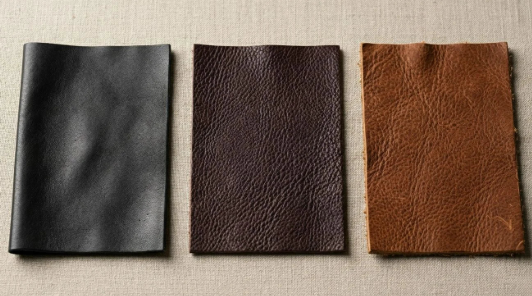
A product page says “genuine leather,” another says “full-grain cowhide,” and a third promises “premium lambskin.” They all sound impressive, but they describe very different things. Knowing a handful of terms will let you compare jackets honestly and avoid paying for words rather than quality.
Leather Quality vs. Leather Type
Two ideas often get mixed up. The type of leather tells you the animal, such as cow, lamb, goat, or buffalo. The grade tells you how much of the original hide surface has been kept or altered. A jacket can be lambskin and still be a lower grade, or cowhide and a very high grade.
Keeping these separate clears up most of the confusion. Leather is made from different layers of the hide, and the outer surface layer is where most of the strength and character sits.
The Grades, From Top to Bottom
Full-Grain
This is the outermost layer with the natural surface intact, including small marks and variations. It is the most durable and develops patina over time. Because the surface hasn’t been sanded away, it breathes well. It also tends to cost more.
Top-Grain
The surface is lightly sanded to remove imperfections, then finished. It looks more uniform and resists stains well, but it is a little less breathable and doesn’t develop patina as dramatically. For many people, it is a sensible balance of appearance and price.
Genuine Leather
This label sounds like the best but is usually a lower tier. It generally means real leather made from the lower layers of the hide, often heavily processed and coated. It is real leather, but it doesn’t wear as long as the grades above.
Bonded or Reconstituted Leather
Made from shredded leather scraps held together with adhesive and a surface coating. Jackets made from it are not long-lasting and are prone to peeling.
Common Animal Types
- Cowhide: thick, tough, and rugged. It suits structured jackets and usually needs a short break-in period.
- Lambskin: soft, light, and smooth. It drapes beautifully but is less resistant to heavy wear.
- Goatskin: durable with a distinctive grain, and softer than cowhide at similar thickness.
- Buffalo: thick with a pronounced texture, and known for toughness.
Heavier hides give a more structured look and last longer under hard use. Lighter ones feel comfortable immediately and suit milder weather.
Finishes Change the Feel
Surface treatment affects how a jacket looks and how much care it needs.
- Aniline: dyed without a heavy coating, so the natural surface shows. It looks rich but marks more easily.
- Semi-aniline: a light protective coat, balancing natural appearance with better stain resistance.
- Pigmented: a more opaque surface coating that gives uniform colour and the best protection from wear.
If you want a jacket you can wear in all weather without worry, a pigmented or semi-aniline finish is more forgiving.
Lining and Construction Terms
The outside is only half the picture. Look for these details too:
- Lining material: cotton, polyester, or quilted. Cotton breathes, and polyester is smoother but can feel warm.
- Stitching: even, tight stitches with reinforced stress points indicate careful making.
- Hardware: zips and snaps should operate smoothly without wobble.
- Hood construction: check that the hood is stitched securely into the collar and lies flat when lowered.
Reading a Listing Honestly
When you browse, look for clear information instead of vague adjectives. Good listings state the grade, the animal, the lining, and the weight or thickness. A leather hooded jacket description that mentions finish, lining type, and hood attachment gives you far more to work with than one that simply says “premium quality.”
Be cautious about:
- Prices that seem too low for the stated grade.
- Descriptions that avoid naming the hide type.
- Heavy reliance on words like “luxury” without any specifics.
Matching Leather to Your Life
Think about how you will use the jacket before deciding which terms matter most.
- Daily commuting and rough use: cowhide or goatskin with a semi-aniline or pigmented finish.
- Mild-weather, smart-casual wear: lambskin for comfort and a smoother look.
- A jacket that will age with you: full-grain with a natural finish.
Setting priorities in advance makes comparing options much faster. A broad range such as The Leather Coats is useful here, because seeing different hides and finishes together makes the differences easier to notice.
Conclusion
Leather labels become simple once you separate type from grade and finish. Learn what each term means, ask for specifics, and match the material to how you really dress. Then you’ll pay for quality you can feel, not just words on a page.