Introduction
Modern manufacturing depends on more than machinery, raw materials, and production schedules. Behind every successful product is a supply chain that connects designers, component manufacturers, fabricators, assemblers, and distributors. When metal components are involved, choosing the right fabrication partner can have a significant impact on product quality, production efficiency, and delivery performance.
For businesses that rely on metal parts and assemblies, outsourcing fabrication can provide access to specialized equipment, technical expertise, and additional production capacity. However, the benefits depend on selecting a supplier that understands the product requirements and can maintain consistent standards throughout the manufacturing process.
A reliable partnership is not simply about finding a company that can cut, bend, or weld metal. It involves communication, engineering collaboration, quality management, production planning, and long-term operational compatibility. Understanding these factors helps manufacturers make better sourcing decisions and build relationships that support sustainable growth.
Why Manufacturing Companies Work With External Fabrication Partners
Many manufacturers choose to outsource some or all of their metal fabrication requirements. Maintaining an internal fabrication department can require substantial investment in machinery, facilities, software, maintenance, and skilled employees. For companies whose primary focus is product development or final assembly, operating every manufacturing process internally may not be the most practical approach.
Working with an external specialist allows businesses to access fabrication capabilities without taking responsibility for every aspect of the production infrastructure. This arrangement can be particularly useful when demand changes, new products are introduced, or specialized processes are required.
An experienced supplier may also help identify production improvements that are difficult to recognize during the initial design stage. Recommendations involving material thickness, component geometry, joining methods, or manufacturing sequences can help make parts easier to produce while maintaining their intended performance.
Companies seeking custom sheet metal fabrication services can benefit from working with a partner that understands how individual components fit into a larger product or assembly. The objective should be to establish a production relationship that supports the manufacturer’s requirements rather than treating each order as an isolated transaction.
Evaluating a Supplier’s Technical Capabilities
One of the first steps in selecting a fabrication partner is understanding what the supplier can actually manufacture. A company may have experience with basic sheet metal work but lack the equipment, processes, or technical knowledge needed for more demanding projects.
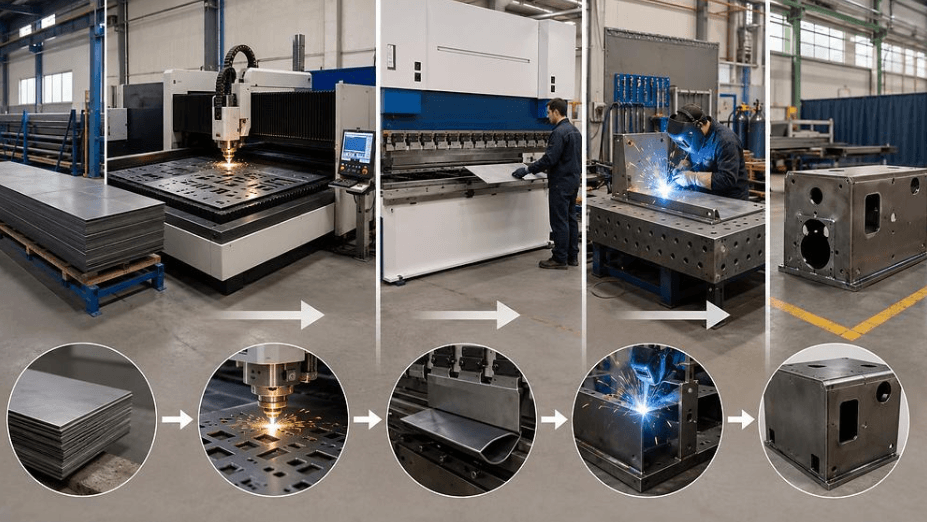
Manufacturers should review the supplier’s equipment, production methods, material experience, and ability to handle different component specifications. Depending on the application, relevant capabilities may include laser cutting, punching, bending, forming, welding, machining, and finishing.
It is also important to understand whether the supplier can manage multiple production stages. When different processes are handled by several subcontractors, coordination becomes more complicated. Each additional handoff can introduce communication gaps, transportation requirements, and scheduling risks.
An integrated manufacturing partner can simplify this process by coordinating more of the work within one production environment. Businesses can review the range of industrial metal fabrication capabilities available to determine whether a potential supplier can support their component requirements from initial processing through subsequent manufacturing stages.
Technical capability should always be evaluated against actual project needs. A supplier does not necessarily need the largest equipment portfolio, but it should have the appropriate resources and experience to manufacture the required parts consistently.
Communication Is Essential to Project Success
Even a technically capable supplier can become difficult to work with if communication is inconsistent. Fabrication projects often involve detailed drawings, engineering revisions, material specifications, tolerances, and production deadlines. Misunderstandings in any of these areas can lead to incorrect components or unnecessary delays.
A strong manufacturing relationship begins with clear information exchange. The buyer should provide accurate drawings, specifications, quantities, material requirements, and relevant application details. The supplier should review this information carefully and identify missing details before production begins.
Communication should also continue after the initial quotation. If a drawing contains a difficult feature, a material is unavailable, or a production process needs adjustment, the supplier should explain the issue and discuss possible solutions.
Engineering changes require particular attention. A small revision to a hole position, bend angle, or component dimension may affect tooling, programming, material usage, and assembly compatibility. Both parties should have an agreed process for reviewing and approving changes.
Manufacturers can improve communication by establishing a single point of contact, maintaining organized drawing revisions, and documenting important project decisions. These practices reduce confusion and make it easier to resolve issues before they affect delivery schedules.
Supplier Qualification Should Go Beyond Price
Price is an important factor in supplier selection, but it should not be the only consideration. A low quotation may appear attractive initially, yet the overall cost can increase if components arrive late, require rework, or fail to meet specifications.
A more complete evaluation considers technical suitability, quality procedures, production capacity, communication, delivery reliability, and commercial terms.
Before committing to a long-term arrangement, manufacturers can request relevant examples of previous work, review sample components, and discuss how the supplier manages inspection and quality documentation. Where appropriate, a trial order can help evaluate the actual production experience.
The qualification process should also examine the supplier’s approach to material sourcing and traceability. Depending on the product, manufacturers may need confirmation of material grades, thicknesses, certificates, or other documentation.
Another important consideration is the supplier’s ability to understand the intended application. A fabrication partner that asks relevant questions about component function and assembly requirements may be better positioned to identify potential production issues than one that simply accepts drawings without review.
Planning Production Capacity and Delivery Schedules
A manufacturing partnership must support the buyer’s production timetable. Even high-quality components have limited value if they arrive after the assembly line requires them.
Before placing an order, both parties should discuss expected quantities, production lead times, material availability, inspection requirements, and shipping arrangements. These factors help establish a realistic delivery schedule.
Capacity planning becomes especially important when demand fluctuates. A supplier may be able to handle a small initial order but struggle when monthly volumes increase. Manufacturers should therefore understand how the partner manages additional demand and whether production resources can be allocated when required.
For recurring orders, forecasts can help suppliers plan material purchases and production workloads. While forecasts may not always represent guaranteed quantities, they provide useful visibility into future requirements.
Businesses should also consider how urgent orders will be handled. A clearly defined process for managing priority work can help both parties respond to unexpected demand without disrupting every existing production commitment.
Managing Supply Chain Risks
Supply chain reliability requires preparation for unexpected events. Material shortages, transportation disruptions, equipment maintenance, staffing challenges, and sudden increases in demand can affect manufacturing schedules.
A dependable fabrication partner should have a practical approach to identifying and managing these risks. This may involve maintaining suitable material inventories, monitoring supplier availability, scheduling preventive equipment maintenance, and communicating potential disruptions early.
Manufacturers should also understand their dependence on individual suppliers. Relying on a single source may simplify purchasing, but it can create difficulties if that supplier experiences an extended interruption.
For critical components, businesses may consider qualifying an alternative supplier or identifying replacement materials and production methods where technically acceptable. These decisions should be made carefully because switching fabrication sources can require new inspections, engineering reviews, and product validation.
Risk management is not about expecting every problem to be prevented. It is about ensuring that both parties can respond quickly and transparently when problems occur.
Quality Management Across the Production Process
Consistent quality is one of the most important requirements in any long-term fabrication relationship. Components must match approved drawings and specifications, and they should perform reliably when incorporated into the finished product.
A supplier’s quality approach should cover more than final inspection. Quality considerations begin with reviewing the design and material requirements, continue through cutting and forming, and extend to welding, finishing, and packaging where applicable.
Dimensional checks can verify that components meet specified measurements. Visual inspections may identify surface damage, inconsistent welds, or finishing defects. More specialized checks may be necessary for parts with demanding tolerances or critical functional requirements.
Manufacturers should agree on inspection expectations before production starts. These may include first-article approval, sampling procedures, inspection reports, or documentation accompanying deliveries.
When a defect occurs, the discussion should focus on identifying the underlying cause rather than simply replacing the affected parts. Corrective actions may involve adjusting machine settings, reviewing drawings, improving handling procedures, or updating inspection methods.
A supplier that treats quality as an ongoing responsibility can help reduce repeated problems and build confidence across future orders.
Engineering Collaboration Can Improve Product Design
A fabrication supplier can contribute valuable manufacturing knowledge before a design reaches full production. This collaboration is especially useful when a product includes complex sheet metal components or several interconnected parts.
For example, an engineer may design a component with a narrow bend, closely spaced holes, or a geometry that is difficult to manufacture using the available equipment. A fabrication specialist can review these features and suggest alternatives that maintain the required function while improving manufacturability.
This type of collaboration is often described as design for manufacturability. It considers how a product will be produced, assembled, inspected, and maintained.
Potential improvements may include simplifying component geometry, reducing unnecessary material changes, standardizing fasteners, adjusting bend locations, or combining multiple pieces into a more efficient design.
Early collaboration is generally more effective than making changes after production has started. Once tooling, purchasing, and assembly schedules are established, design revisions can become more expensive and disruptive.
Manufacturers should therefore involve fabrication partners during the engineering review stage whenever possible, particularly for new products or major design updates.
Creating a Long-Term Supplier Relationship
A successful supplier relationship develops through consistent performance and mutual understanding. Both parties benefit when expectations are clear and project information is shared reliably.
Regular performance reviews can help manufacturers assess delivery accuracy, product quality, response times, and issue resolution. These reviews should be constructive and based on measurable information rather than general impressions.
It is also useful to discuss future product requirements and potential changes in production volume. A supplier that understands the buyer’s long-term plans may be able to recommend equipment adjustments, production improvements, or alternative manufacturing methods.
Commercial transparency matters as well. Pricing discussions should consider material costs, production complexity, order quantities, and changes in specifications. Both parties should understand how revised requirements affect quotations and delivery commitments.
The goal is to create a relationship in which the supplier understands the manufacturer’s expectations and the manufacturer has confidence in the supplier’s ability to deliver.
Choosing a Fabrication Partner for Future Growth
As products become more sophisticated and customer expectations increase, manufacturers need supply chain partners that can support both current orders and future development. The right fabrication supplier offers more than production capacity. It provides technical understanding, reliable communication, consistent quality, and the ability to adapt as requirements change.
A careful selection process should evaluate equipment, manufacturing experience, quality procedures, production planning, and engineering support. Businesses should also consider how well a supplier communicates and responds when challenges arise.
Choosing a partner based solely on the lowest quotation can overlook important factors that influence the total cost and reliability of manufacturing. A more balanced approach considers the complete production relationship, from design discussions and material selection to inspection and delivery.
Ultimately, reliable manufacturing partnerships are built through shared expectations, practical collaboration, and continuous improvement. When companies work with fabrication suppliers that understand their technical and operational goals, they can strengthen their supply chains, improve production consistency, and create a more dependable foundation for long-term business growth.