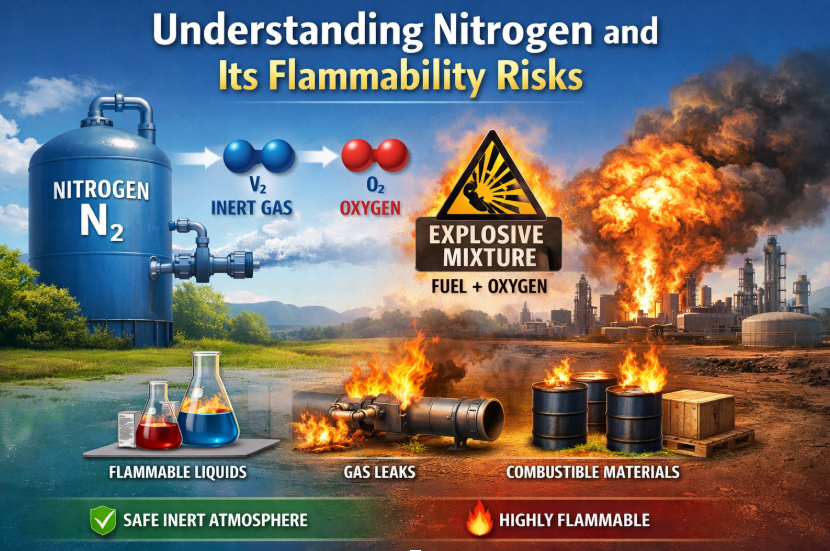
Nitrogen is one of the most abundant elements on Earth, making up approximately 78% of the atmosphere. Its role is essential in many biological and industrial processes, from supporting plant growth to creating inert environments for chemical reactions. Despite being generally considered non-flammable and safe, there is often confusion surrounding nitrogen flammability. Understanding the true risks associated with nitrogen is critical for industries, laboratories, and safety-conscious individuals.
What Is Nitrogen?
Nitrogen is a colorless, odorless, and tasteless gas at room temperature. Chemically, it is relatively inert, meaning it does not easily react with other elements or compounds under normal conditions. This inertness makes nitrogen an ideal component in many industrial processes where oxidation or combustion must be prevented. Nitrogen is widely used to create protective atmospheres in packaging, chemical storage, and electronics manufacturing.
Its inert properties also make nitrogen a key player in food preservation. By displacing oxygen in packaging, nitrogen prevents spoilage and extends shelf life. Despite its apparent safety, nitrogen’s interaction with other substances under certain conditions can present hazards, which is why understanding nitrogen flammability is essential.
The Misconception About Nitrogen Flammability
Many people assume that because nitrogen is non-reactive, it is entirely free of fire risk. Technically, nitrogen itself does not burn and cannot support combustion. However, the term nitrogen flammability often arises in discussions about nitrogen in combination with other chemicals or in pressurized forms.
For instance, when nitrogen is used in high-pressure systems or stored as a liquid, it can create extreme conditions that affect the behavior of flammable materials nearby. Liquid nitrogen, with its extremely low temperature, can cause materials to become brittle and more susceptible to ignition once exposed to heat or friction. Therefore, while nitrogen itself is not flammable, improper handling can indirectly contribute to fire hazards.
Industrial Applications and Safety Concerns
Industries that rely on nitrogen, such as chemical manufacturing, aerospace, and electronics, must be vigilant about safety protocols. Nitrogen flammability risks often stem from the displacement of oxygen. In enclosed spaces, nitrogen can reduce oxygen levels to a point where it becomes dangerous for humans. Low oxygen levels do not cause fire, but they can lead to suffocation and increase the risk of accidents if a fire occurs nearby.
In chemical processing plants, nitrogen is used to blanketing reactive chemicals to prevent explosions. However, if nitrogen is released improperly or if pressure builds up in storage tanks, accidents can occur. Understanding how nitrogen interacts with equipment, storage containers, and surrounding materials is essential for maintaining a safe work environment.
Nitrogen in Fire Suppression
Interestingly, nitrogen is also employed as a fire suppressant in certain systems. By displacing oxygen around combustible materials, nitrogen prevents flames from spreading. This use highlights the dual nature of nitrogen: while it is not flammable, its presence can significantly alter how fire behaves in an environment.
Fire suppression systems that use nitrogen are particularly useful in server rooms, data centers, and storage facilities for sensitive materials. In these cases, the controlled release of nitrogen reduces the risk of fires without introducing water or chemicals that could damage equipment. Even in fire suppression, awareness of nitrogen flammability-related safety concerns is necessary, mainly regarding pressure management and proper ventilation.
Laboratory Precautions
In laboratories, nitrogen is commonly used as a carrier gas, for purging, or to create inert atmospheres for chemical reactions. Lab technicians must be aware of nitrogen flammability risks, particularly when working with flammable solvents or reactive metals. Nitrogen can rapidly displace oxygen in confined spaces, creating an asphyxiation hazard.
Handling liquid nitrogen requires specialized equipment and safety protocols. Protective gloves, face shields, and proper ventilation are essential to prevent frostbite and respiratory problems. While liquid nitrogen does not burn, it can cause extreme reactions when it comes into contact with certain metals or organic materials, potentially leading to explosions or rapid combustion of surrounding substances.
Myths About Nitrogen and Fire
There are several myths surrounding nitrogen flammability that often cause confusion. One common misconception is that nitrogen can catch fire under certain conditions. In reality, nitrogen gas does not ignite. Its primary risk lies in its ability to create environments where fire behaves differently or where oxygen levels are dangerously low.
Another myth is that nitrogen-enriched atmospheres are always safe. While reducing oxygen can prevent ignition of flammable materials, it also poses significant risks to humans and animals. Proper monitoring and safety measures are necessary whenever nitrogen is introduced into enclosed spaces.
Best Practices for Handling Nitrogen
To manage nitrogen safely, industries and laboratories should follow best practices that consider both chemical properties and environmental factors. These practices include proper storage in pressure-rated containers, regular inspection of equipment, and monitoring oxygen levels in enclosed areas.
Training personnel is also crucial. Employees must understand how nitrogen flammability indirectly affects safety, including the potential for asphyxiation, equipment failure, and interactions with flammable substances. Establishing clear emergency procedures and providing access to safety gear can prevent accidents and mitigate risks.
Environmental and Health Considerations
Beyond fire-related concerns, nitrogen use has environmental and health implications. Excessive release of nitrogen in certain forms, such as nitrous oxide, can contribute to greenhouse gas emissions and ozone depletion. While elemental nitrogen gas itself is harmless, the compounds formed in industrial processes must be managed responsibly.
From a health perspective, nitrogen-induced low oxygen environments can lead to dizziness, unconsciousness, or even death. It is essential to ensure adequate ventilation and monitoring systems whenever nitrogen is stored or used in large quantities.
See also: The Future of Tech: Top Gadgets and Trends for Geek Enthusiasts in 2025
Looking Ahead: Safety and Innovation
As industries continue to innovate, the role of nitrogen remains significant. Advances in safety technologies, including automated monitoring and controlled nitrogen release systems, are helping reduce risks associated with nitrogen flammability. Understanding how nitrogen interacts with other materials and environments will remain a critical part of industrial safety planning.
Organizations are also exploring ways to minimize nitrogen-related hazards while maximizing its benefits. Proper education, regulation, and adherence to safety standards are key to ensuring that nitrogen continues to be a safe and valuable resource across multiple sectors.
Embracing Safe Practices for a Secure Future
Awareness is the most powerful tool when dealing with nitrogen. Understanding nitrogen flammability and its implications allows industries, laboratories, and individuals to harness its benefits without compromising safety. By implementing proper handling procedures, monitoring oxygen levels, and training personnel, the risks associated with nitrogen can be effectively managed.
Nitrogen will continue to play an essential role in technology, food preservation, chemical processing, and fire safety systems. With informed practices and careful attention to safety protocols, its potential can be fully utilized while minimizing hazards. Embracing these best practices ensures a secure, productive, and responsible approach to working with one of nature’s most abundant and versatile elements.