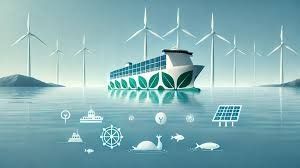
Global shipping moves the majority of the world’s trade, transporting goods across oceans every day. While this industry plays a critical role in the global economy, it also faces increasing pressure to reduce environmental impact. Governments, maritime organizations, and shipping companies are all seeking ways to lower emissions and transition toward cleaner energy systems. As a result, ship design is undergoing one of the most significant transformations in modern maritime history.
Traditional vessels have long relied on heavy fuel oil and diesel engines, which produce carbon emissions and other pollutants. In response to growing environmental concerns, naval architects and marine engineers are developing innovative ship design strategies focused on alternative fuels, energy efficiency, and zero-emission technologies.
By 2026, sustainable ship design is no longer just a theoretical concept. Hydrogen-powered vessels, ammonia-fueled engines, hybrid propulsion systems, and fully electric ships are beginning to shape the future of maritime transport. These developments are forcing engineers to rethink everything from fuel storage and propulsion systems to hull design and onboard energy management.
Understanding these trends provides valuable insight into how modern ship design is evolving to meet environmental goals while maintaining safety, reliability, and operational efficiency.
Why Sustainability Has Become Central to Ship Design
The maritime industry has traditionally focused on durability, cargo capacity, and fuel efficiency. While these priorities remain important, environmental performance has become an equally critical design consideration.
Global shipping contributes a measurable portion of worldwide greenhouse gas emissions. As international regulations tighten and environmental awareness grows, the industry is under pressure to reduce its carbon footprint. This challenge has pushed naval architects to rethink the fundamental principles of ship design.
Modern sustainable ship design focuses on reducing emissions through cleaner fuels, improved propulsion technologies, and more efficient hull forms. Engineers must also consider the entire lifecycle of a vessel, including construction materials, operational energy use, and long-term environmental impact.
Designing ships that are both environmentally responsible and commercially viable requires balancing innovation with practicality. The transition toward greener shipping technologies is complex, but it is accelerating rapidly as research and investment increase.
Hydrogen as a Transformative Fuel in Ship Design
Hydrogen has emerged as one of the most promising fuels for sustainable maritime transportation. When used in fuel cells, hydrogen produces electricity with water as the only direct byproduct, making it an attractive option for reducing emissions.
In ship design, hydrogen introduces new engineering challenges and opportunities. Hydrogen fuel systems require specialized storage tanks capable of handling extremely low temperatures or high pressure. These storage systems take up more space than conventional fuel tanks, which means naval architects must carefully integrate them into the vessel’s layout.
Hydrogen-powered ships typically use fuel cells that convert hydrogen into electricity, which then powers electric propulsion systems. This approach eliminates combustion-related emissions during operation and significantly reduces noise and vibration levels.
Several prototype vessels and pilot projects have demonstrated the feasibility of hydrogen propulsion in smaller ships such as ferries and coastal vessels. While large-scale hydrogen adoption still faces infrastructure challenges, its potential role in future ship design continues to grow as technology improves.
Ammonia-Fueled Ships and the Next Generation of Marine Engines
Ammonia is another alternative fuel receiving significant attention in modern ship design. Unlike hydrogen, ammonia can be stored as a liquid under more manageable conditions, making it easier to transport and store on ships.
Ammonia contains no carbon atoms, meaning it does not produce carbon dioxide during combustion. This characteristic makes it a promising candidate for reducing greenhouse gas emissions in maritime transportation.
Naval architects working with ammonia-powered ship design must address several engineering considerations. Ammonia is toxic and requires specialized safety systems to ensure safe handling and storage. Fuel tanks, ventilation systems, and engine components must all be carefully designed to minimize risks.
Marine engine manufacturers are developing engines capable of burning ammonia either alone or in combination with other fuels. These engines aim to deliver reliable propulsion while significantly reducing emissions.
Although ammonia technology is still evolving, it is widely considered one of the most viable long-term solutions for large ocean-going vessels that require high energy density and long-range capability.
Zero-Emission Ship Concepts and Electric Propulsion
In addition to hydrogen and ammonia, fully electric ships are becoming increasingly relevant in sustainable ship design. Electric propulsion systems powered by batteries produce no direct emissions and offer highly efficient energy conversion.
Electric ships are particularly well suited for short-distance operations such as ferries, inland cargo vessels, and harbor service ships. In these applications, vessels can recharge at ports using renewable electricity, reducing environmental impact even further.
Battery technology continues to improve, allowing ships to travel longer distances without recharging. However, the energy density of batteries remains lower than that of traditional fuels, which limits their use in long-range ocean vessels.
Ship design for electric propulsion also requires careful integration of battery systems, cooling mechanisms, and power management technologies. Engineers must balance battery capacity with vessel weight and cargo space to ensure operational efficiency.
Despite these challenges, electric propulsion is already playing an important role in the shift toward sustainable maritime transportation.
Read Also: The Strategic Leader’s Framework for MLM Technology Selection
Hull Optimization for Energy Efficiency
Sustainable ship design is not only about alternative fuels. Improving hydrodynamic efficiency is another crucial strategy for reducing emissions and fuel consumption.
Hull shape directly influences how much resistance a ship experiences as it moves through water. Lower resistance means the vessel requires less propulsion energy, which leads to reduced fuel consumption and lower emissions.
Modern naval architects use advanced simulation tools to optimize hull forms and reduce drag. These tools analyze water flow around the vessel and identify opportunities to improve efficiency through subtle design adjustments.
Innovative hull coatings that reduce friction and prevent marine growth also contribute to energy savings. By minimizing resistance, these coatings help ships maintain efficiency over long operational periods.
Even small improvements in hull performance can significantly reduce fuel consumption across thousands of voyages, making hydrodynamic optimization a key element of sustainable ship design.
Hybrid Propulsion and Integrated Energy Systems
Hybrid propulsion systems are becoming increasingly common in modern ship design. These systems combine traditional engines with electric motors and energy storage technologies to improve efficiency and reduce emissions.
Hybrid ships can operate in different modes depending on operational requirements. For example, a vessel might use electric propulsion while entering a port to minimize emissions and noise, then switch to conventional engines during long-distance travel.
Integrated energy management systems allow ships to optimize power usage across propulsion systems, onboard equipment, and energy storage units. These systems analyze energy demand in real time and adjust power distribution to improve efficiency.
Hybrid technologies also support the integration of renewable energy sources such as wind-assist systems or onboard solar panels. While these technologies typically provide supplemental power rather than primary propulsion, they contribute to reducing overall energy consumption.
The combination of hybrid propulsion and smart energy management represents a practical step toward cleaner maritime operations.
Infrastructure Challenges for Sustainable Ship Design
While alternative fuels and advanced propulsion technologies show great promise, the transition toward sustainable ship design also depends on supporting infrastructure.
Ports must develop facilities capable of supplying hydrogen, ammonia, and electricity for vessel charging. These infrastructure investments require coordination between governments, shipping companies, and energy providers.
Safety standards and regulatory frameworks must also evolve to address the unique characteristics of new fuels and propulsion systems. For example, storing and handling hydrogen or ammonia requires different safety procedures compared to conventional fuels.
The development of global fuel supply networks will play a major role in determining how quickly sustainable ship design concepts can be adopted across the maritime industry.
Despite these challenges, progress is already underway in several major ports and maritime hubs.
The Role of Digital Technology in Sustainable Ship Design
Digital technologies are also transforming how naval architects approach sustainable ship design. Advanced modeling software allows engineers to simulate vessel performance under different environmental and operational conditions.
These digital tools help designers evaluate energy consumption, emissions levels, and propulsion efficiency long before a ship is built. Engineers can test alternative fuel systems, optimize hull shapes, and analyze energy flows within virtual models.
Digital twins, which are virtual replicas of physical ships, allow operators to monitor vessel performance in real time. By analyzing operational data, engineers can identify opportunities to improve efficiency and reduce emissions during a ship’s lifecycle.
The integration of digital technology with sustainable engineering practices is helping accelerate innovation in ship design.
Frequently Asked Questions About Sustainable Ship Design
What is sustainable ship design?
Sustainable ship design focuses on creating vessels that minimize environmental impact. This includes reducing emissions, improving energy efficiency, using cleaner fuels, and integrating advanced propulsion technologies.
Why are hydrogen and ammonia considered alternative marine fuels?
Hydrogen and ammonia produce little or no carbon dioxide during use. These fuels offer potential pathways for reducing greenhouse gas emissions in maritime transportation.
Are zero-emission ships already in operation?
Some smaller electric ships and hydrogen-powered vessels are already operating in pilot projects and regional routes. However, large-scale zero-emission shipping is still developing.
What challenges do alternative fuels face in maritime shipping?
Challenges include fuel storage requirements, infrastructure development, safety considerations, and the need for new engine technologies capable of using alternative fuels efficiently.
How does hull design affect ship sustainability?
Efficient hull shapes reduce water resistance, which lowers fuel consumption and emissions. Even small improvements in hydrodynamic efficiency can significantly impact overall energy use.
Will sustainable ship design replace traditional ships soon?
The transition is expected to occur gradually. Many new vessels are already being designed with future alternative fuels in mind, allowing them to adapt as new energy technologies become widely available.
Conclusion: The Future of Ship Design Is Sustainable Innovation
The maritime industry is entering a period of profound transformation as environmental priorities reshape the principles of ship design. Hydrogen fuel cells, ammonia-powered engines, electric propulsion systems, and hybrid technologies are redefining how ships generate power and move across oceans.
At the same time, improvements in hull optimization, energy management, and digital modeling are helping naval architects create vessels that use energy more efficiently than ever before. These innovations are not only reducing emissions but also improving operational performance and long-term sustainability.
Although challenges remain, particularly in fuel infrastructure and technology scaling, the direction of progress is clear. Sustainable ship design is becoming a central focus for maritime engineers, shipping companies, and policymakers worldwide.
As new technologies mature and global investment continues to grow, the ships of the future will increasingly rely on cleaner fuels and smarter engineering solutions. The evolution of ship design toward zero-emission concepts represents a critical step in building a more sustainable maritime industry while maintaining the global connectivity that modern society depends on.