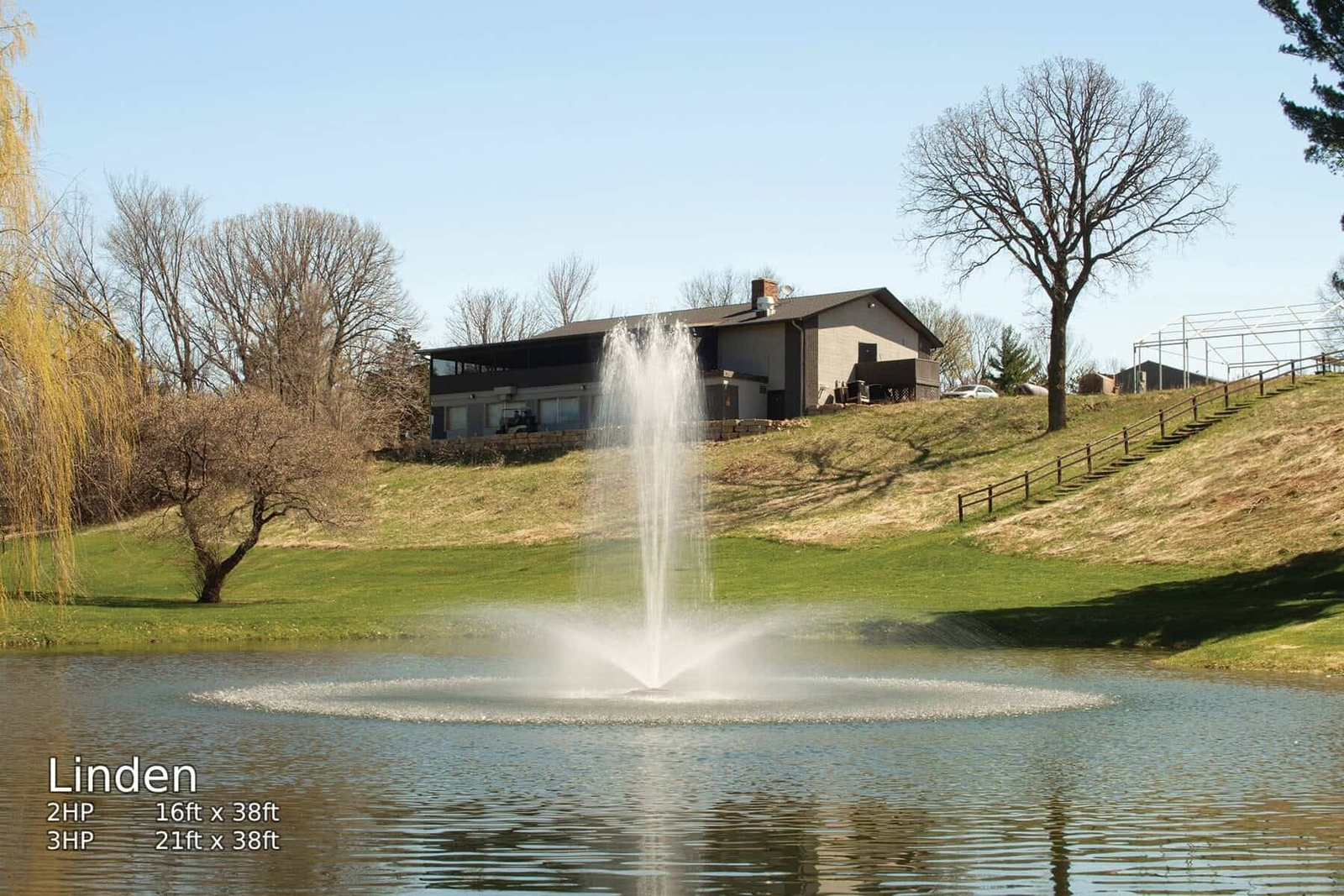
Picture a heavy summer storm rolling through overnight. By morning, the pond sits a foot higher, and your fountain has drifted toward the dock at an odd tilt. That kind of scene can happen with large pond fountains, because the water under them seldom stays at one level for long. Rain, dry spells, and pond outlets all move the surface up and down across the year. How you anchor the unit decides whether it rides those changes calmly or fights against them.
Anchoring is often the slowest part of setting up large pond fountains, even when the rest of the install goes smoothly. The aim sounds simple. You want the float to hold its spot, sit level, and move with the water without yanking on its ropes or its cord.
Why Water Levels Shift Under Large Pond Fountains
Here is the problem in plain terms. If your fountain sits in a stormwater pond, the swings come built into the design. These ponds keep a permanent pool, with a temporary pool above it that fills after storms and drains slowly over at least a day.
Backyard ponds change too, just more slowly. A long dry stretch can pull the level down week by week, and a wet spring may push it back up. Either way, a rope setup that fits one water level might not suit the next one.
See also: Regain Control of Your Life With Drug Addiction Treatment
The Depth Rule for Anchoring Large Pond Fountains
Start with math, since it shapes every other choice. One fountain manufacturer tells owners to set each anchor at least 3 feet out from the float for every foot of water depth. In a pond 6 feet deep, that puts the anchor roughly 18 feet away.

Why so far? The wide spread keeps the unit from twisting as the motor turns. A long, angled line also tightens less when the float rises, which gives you a little more room during high water.
The lines should hold the float firmly with no sag, but they shouldn’t be cut so short that they strain.
Shoreline Ties or Bottom Anchors for Large Pond Fountains?
You have two common routes. You can tie the float back to fixed points on shore, or you can run lines down to cinder blocks resting on the bottom. Some fountains ship without this hardware and list two nylon ropes plus two weights or concrete blocks as items you supply.
Shore ties are usually easier to reach and adjust later. Bottom anchors keep ropes away from mowers and people walking the bank, perhaps, though moving them means getting back out on the water. Which works better? It likely depends on how steep your banks are and how often you expect to fine-tune things.
How a Midpoint Weight Keeps Large Pond Fountains Level
Now for the detail that handles rising and falling water. For ponds with big swings, the same manufacturer suggests hanging a small weight at the middle of each rope. For example, it suggests a one-foot length of 1-inch galvanized pipe.
When the level drops, the weight sinks and takes up the extra slack. When the level climbs, the weight lifts, and the float rises with the water. That only works if the weight stays light enough to allow the rise.
There is a small bonus, too. The weight pulls the ropes deeper, making them harder to spot from shore.
Protecting the Power Cord on Large Pond Fountains
A cord that hangs under its own weight can tilt the float or damage the unit over time. Strain relief solves this by linking the cord to the nearest mooring rope, so the rope takes the load. If your cord lacks a clamp, the manual suggests securing it to a float hole with cable ties.
The manual is firm on one more point. Never lift or drag the unit by its cord, and use the ropes whenever you need to pull it toward shore.
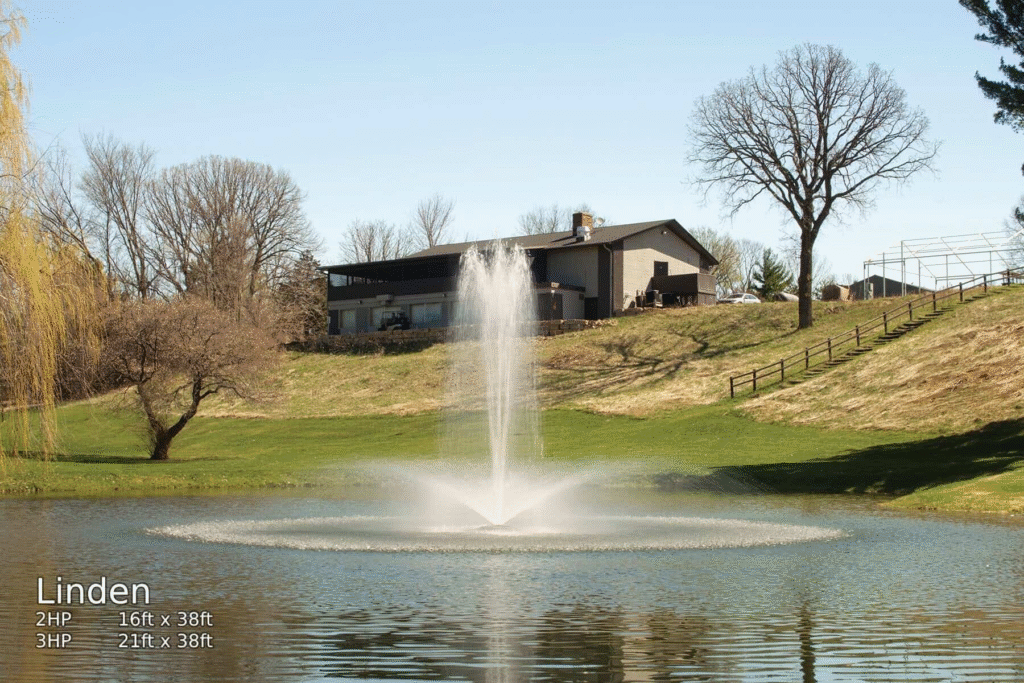
What if the cord looks too short for high water? Do not splice on extra length. One manufacturer states that adding cord voids the warranty and can cause nuisance GFCI trips, so choose the right length when you order.
Minimum Depth Checks for Large Pond Fountains in Dry Weather
Falling water brings its own set of problems. Every floating unit has a minimum operating depth, and the figure changes with size. Within one product line, it runs from 17.5 inches on a 3/4 HP unit up to 26 inches on a 5 HP unit.
The manual lists low water as one reason a unit may shut off from overheating. It also says the spray can turn uneven and sporadic without enough water.
So if the pattern starts sputtering in late summer, measure the depth under the float before you assume the motor is failing.
Wapping Up
Every pond behaves a little differently, and your first setup may not be your last. Give it a full season, watch how the float reacts, and adjust from there. Are you still picking a unit? The guide to choosing a pond fountain can help you match depth, size, and cord length to your water. You can also compare models across the full range of pond fountains.