NFC business cards promise to replace the paper stack in your wallet with a single tap. Paper business cards have survived every prediction of their death so far. If you are ordering cards this year, the choice comes down to how each one behaves in a real handshake.
NFC vs Paper Business Cards: How Each One Works
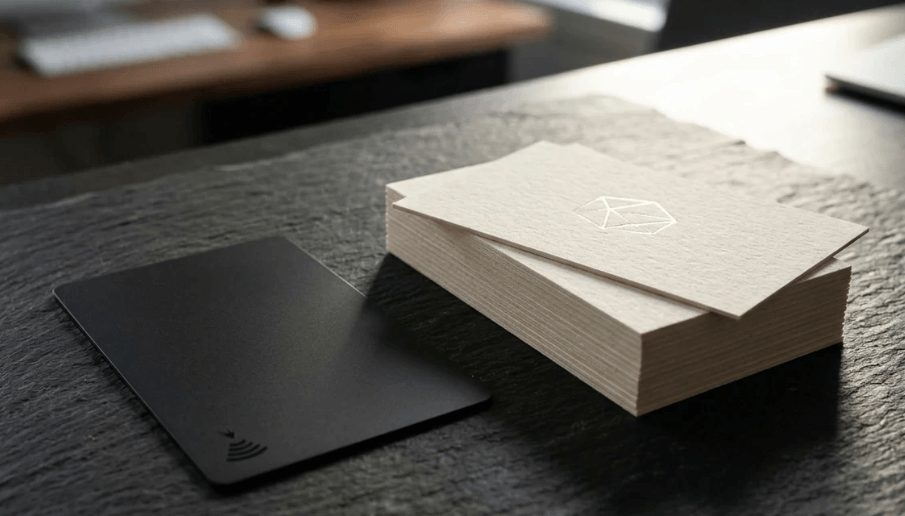
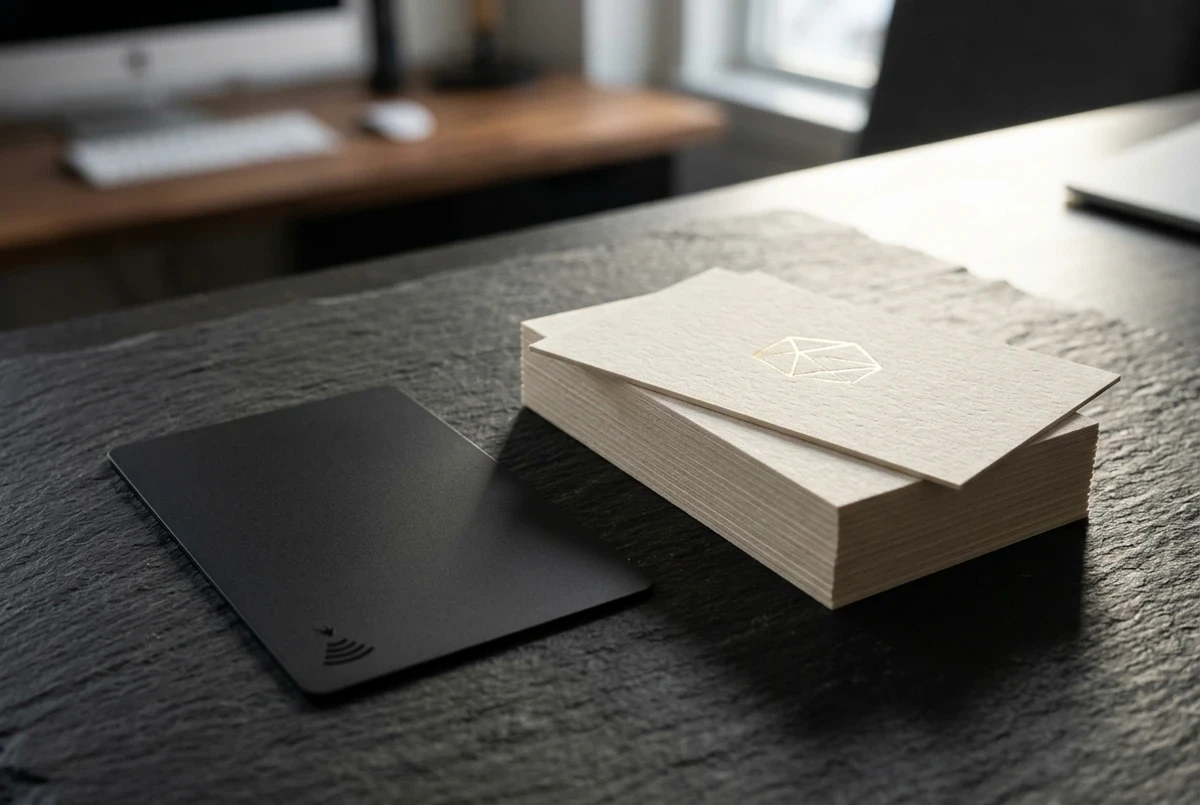
An NFC business card holds a small chip. Tap it against a phone and a link opens with your contact details, portfolio or social profiles. No app is needed, and you can edit the linked page whenever your details change.
A printed card does one job: it puts your name in someone’s hand. The quality of that object matters. Print shops such as Five D Print offer business card printing on standard and premium stocks with matte, gloss, soft-touch and foil finishes, so the card itself carries part of the first impression.
Where NFC Business Cards Come Out Ahead
NFC wins on speed and flexibility. One card can be used again and again, the details never go out of date, and the contact lands straight in the other person’s phone with no retyping. The tap is also a talking point, which helps at tech events.
The weak spots are practical. Older phones cannot read the chip without extra steps, and some Android phones ship with NFC switched off. Each card costs far more than a paper one, so you cannot leave a handful on a counter. And when the tap fails, the conversation stalls while two people stare at a phone.
Why Printed Business Cards Still Hold Their Ground
Paper works with every person, every time. There is no battery, setting or signal involved. You can hand out fifty custom business cards at a conference, pin one to a notice board, clip one to a quote or leave one with a receptionist. A printed card also stays behind as a physical reminder after the meeting.
The limits are real too. Printed details are fixed, so a new job title means a new print run, and the recipient has to type your number in by hand. That second problem now has a simple fix.

The Verdict: Printed Cards With a QR Code
For most people, the winner is a paper business card with a QR code printed on the back. A scan saves your details as a contact or opens the same profile page an NFC chip would, and nearly every phone camera can read it. You keep the low cost and reach of print and gain the convenience of digital.
Three details make it work. Print the code at least 2 cm wide, keep it dark on a light background and use a link you can update later. A matte finish on that side avoids glare.
NFC is a good extra if you network often and like the effect. As your only card, it leaves too many people out. Paper with a QR code covers everyone.