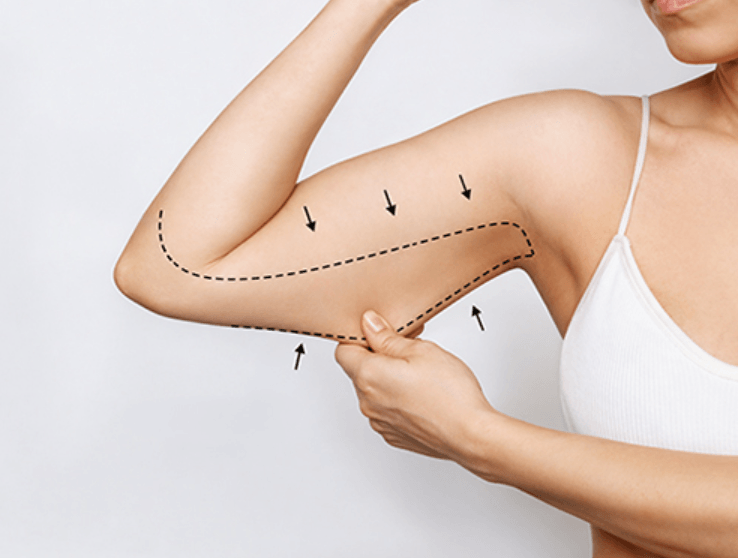
Sleeves become a strategy. That is how it usually starts. Someone drops forty pounds, feels proud, then catches a glimpse of their upper arms in a fitting-room mirror. The skin hangs. It swings a little when they wave. No amount of tricep work changes that, and the whole thing feels unfair, because effort has solved most other problems.
Upper-arm contouring exists for exactly that gap. It is surgery, though, not a shortcut, and it carries trade-offs that deserve a slow read. Some people decide against it once they understand where the scar goes. Others call it the best money they ever spent and mean it.
What follows is the part a consultation often skims: what the procedure does, who it suits, how healing actually feels, and what it costs in time as well as dollars. Read it before the sales pitch rather than after.
Why Loose Upper-Arm Skin Resists Exercise
Skin is an organ with a memory. Stretch it for years and the elastin inside gives up. It does not snap back the way a waistband does. Weight loss empties the fat underneath, aging thins the dermis, and genetics decides how forgiving your tissue was in the first place. What remains is a sleeve with nothing left to fill it.
Muscle sits under all of that. Building it adds volume, which can tighten the drape slightly, and that is where the gym myth comes from. Volume is not the same as a smaller envelope. The American Society of Plastic Surgeons states the point plainly: drooping upper-arm skin is a condition exercise cannot correct.
Who Tends to Be a Good Candidate
Timing matters more than age. The strongest candidates have held a steady weight for six months at minimum, and longer than that after bariatric surgery. Weight still in motion means tissue still changing, and operating mid-change wastes a good result.
Health comes next. Smoking heals badly, because nicotine starves the small vessels right where an incision needs them most. Uncontrolled diabetes raises infection risk. Existing lymphedema in the arm changes the calculation altogether, and a careful surgeon will say so.
Then comes the conversation about what success means. Someone who wants a smoother line under clothing usually ends up happy. Someone who wants an unmarked arm will not. Anyone comparing clinics for an arm lift Toronto consultation should hear that difference stated out loud at the first visit.
What the Procedure Involves
A brachioplasty removes skin, tightens the tissue beneath it, and often removes some fat in the same sitting. The surgeon marks the arm while the patient stands, because gravity tells a truth the operating table hides. The excess is excised, usually along the inner arm somewhere between the armpit and the elbow, and what remains is redraped and closed in layers.
Technique follows the amount of laxity. A small amount can sometimes be handled through a short incision tucked into the armpit crease. Significant looseness needs a longer line. Liposuction on its own suits arms with firm skin and stubborn fat, which is a different patient with a different problem. Anesthesia is usually general, and most people go home the same day.
Scars, Recovery, and Risk
The scar is the trade. It is permanent, it runs along the inner arm, and anyone who goes looking will find it. Thoughtful placement keeps it out of ordinary sightlines. Diligent aftercare keeps it flat and pale. Nothing erases it, and a surgeon who implies otherwise is selling.
Recovery arrives in stages. Compression sleeves go on early and stay on for weeks. Swelling peaks within the first few days, then fades across months rather than days. Desk work often resumes inside two weeks, while lifting, pushing, and reaching overhead wait considerably longer than patients expect.
Risk deserves numbers, not adjectives. A review of twenty-seven studies covering 1,065 brachioplasty patients recorded complications in 28.9 percent of cases, led by hypertrophic scarring, seroma, and hematoma, with nerve injury in 1.5 percent and no thromboembolism or sepsis at all. Read that as minor problems being common and serious ones being uncommon. Plan for the first category instead of being blindsided by it.
Vetting the Surgeon and the Real Price
Credentials carry weight here, and the titles are slippery. The Canadian Society of Plastic Surgeons points out that only the Royal College certifies specialists in Canada, and it recommends verifying that certification, checking the provincial college for disciplinary history, and asking the surgeon outright how often they perform the procedure and what their complication rate looks like.
Ask about the facility too. Ask who gives the anesthesia and what their certification is. Ask what happens if a revision becomes necessary, and who pays for it. Operating rooms keep getting more sophisticated, and the wider move toward robotic and digitally assisted surgery has raised precision across specialties, though arm contouring still rests on a surgeon’s judgment and hands.
The quoted fee is rarely the total. Facility and anesthesia charges, pre-operative bloodwork, compression garments, prescriptions, follow-up appointments, and unpaid time off work all land on the same card. Build the budget from the sum.
Making the Decision
Upper-arm contouring is a narrow procedure with a specific job. It removes skin that will never retract on its own, and it does that reliably. It does not substitute for weight loss, it does not improve muscle tone, and it does not come without a mark.
The patients who feel best afterward tend to share a pattern. They waited until their weight settled, they picked a certified specialist rather than the cheapest quote, they understood the scar before they consented, and they cleared enough calendar to heal without rushing back to a bench press.
So take the long consultation. Bring written questions, ask for the full cost breakdown, and leave if anything sounds guaranteed. A good decision here is slow, informed, and entirely yours.