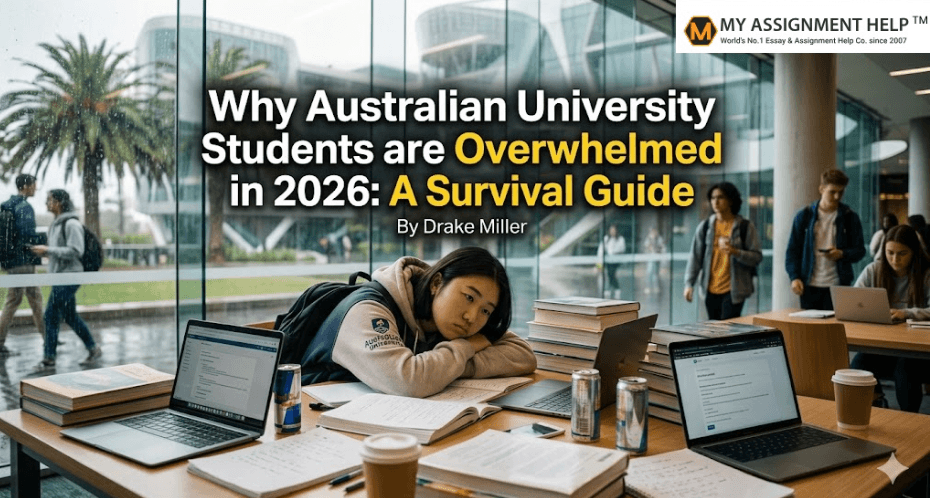
The dream of walking through the sandstone arches of the University of Sydney, the modern corridors of Monash, or the sprawling campuses of UQ is a rite of passage for thousands of Australian high school graduates and international students. Australia’s tertiary education sector remains world-class, offering a gateway to professional success and personal growth in a globalized economy. However, beneath the vibrant campus life and the promise of a bright future lies a sobering reality: a significant portion of the student population is struggling.
According to 2025-2026 national student wellbeing reports, psychological distress among university students is at an all-time high. The transition from Year 12 to higher education—and the subsequent years leading to graduation—has become a gauntlet of academic, financial, and social pressures. For many, the “lucky country’s” education system feels more like a pressure cooker than a path to prosperity.
1. The High-Stakes Academic Transition: Year 12 to Bachelor’s Degree
For many high school students, the jump from the structured environment of the ATAR or VCE years to a Bachelor’s degree is less of a step and more of a leap. In high school, the structure is rigid; teachers often provide constant reminders about deadlines and detailed scaffolding for assignments.
Universities, however, operate on the principle of “independent learning.” Suddenly, a student is responsible for managing their own lecture attendance, researching complex topics without a clear roadmap, and mastering academic referencing styles like APA, Harvard, or AGLC. This sudden autonomy is often where the first cracks appear. The lack of immediate feedback can lead to a “procrastination-anxiety” cycle. For a freshman, the fear of failing a first-year unit isn’t just an academic setback; it’s a blow to their identity as a “good student.” This leads to a crushing workload as finals approach, often resulting in students searching for professional coursework help to stay afloat.
2. The “Earn While You Learn” Trap and the Cost-of-Living Crisis
Australia is currently navigating a sustained cost-of-living crisis in 2026. For the average student, the Youth Allowance or Austudy payments rarely cover the skyrocketing cost of rent in educational hubs like Sydney, Melbourne, or Brisbane. Recent data suggests that student rental stress has increased by 15% over the last two years.
Consequently, most students work part-time or even casual full-time hours. Balancing a 25-hour work week with a full-time course load—which is officially estimated to require 40 hours of study per week—is mathematically impossible without sacrificing sleep or mental health. When a student has to choose between finishing an essay and taking an extra shift to pay rent, the resulting stress is immense.
3. Digital Overload and the Need for “Agentic Literacy”
Modern Australian universities rely heavily on Learning Management Systems (LMS) like Canvas, Blackboard, or Moodle. While these tools offer flexibility, they also create a sense that school never ends. Notifications for new readings, forum posts, and recorded lectures ping on students’ phones 24/7.
In 2026, the challenge isn’t just the volume of information; it’s the complexity of the tools used to manage it. This is where “Agentic Literacy” becomes a survival skill. Students are no longer just using search engines; they are interacting with Large Language Models (LLMs) and Agentic AI to summarize research and organize workflows. However, without a strategy to “switch off,” these tools can contribute to a sense of digital fatigue. The digital nature of modern education has blurred the boundaries between “home time” and “study time.” The challenge today is filtering the constant stream of digital demands while maintaining the ethical boundaries of AI integration in student work.
4. The Complexity of Assessments and the Quest for High Distinctions
University assignments have evolved significantly. It’s no longer just about writing a simple essay; students are now asked to produce complex literature reviews, annotated bibliographies, case studies, and reflective journals that require a deep understanding of pedagogy.
For students aiming for High Distinctions (HDs) to remain competitive in a crowded job market, the pressure to produce flawless work is paralyzing. The grading standards have become more rigorous as institutions seek to maintain their global rankings. This is often where students look for external support to refine their drafts. Myassignmenthelp provides the necessary guidance to break down complex prompts into manageable tasks, helping students regain their footing when the academic requirements become obscure.
5. The “Isolation” of International and Rural Students
Australia remains a global hub for international education, but the stressors for these students are unique and heavy. International students face language barriers, cultural adjustment, and the immense pressure of high tuition fees paid by their families back home. In the Australian context, failing a unit isn’t just a setback; it’s a massive financial blow that can jeopardize visa status.
Similarly, rural and regional students who move to major cities often feel a sense of “belonging uncertainty.” Without their usual support networks, the isolation of a large, anonymous campus can turn minor academic stress into a major mental health crisis.
See also: Ontario Remote Work Tax Rules 2026: Deductions & Savings
6. Graduate Job Anxiety and the “Resume-Building” Obsession
In the past, a degree was a guaranteed ticket to a career. Today, the Australian job market is highly competitive and increasingly focused on “employability skills” and the ROI of writing and communication. Students are told they need more than just good grades; they need internships, volunteer work, and a “personal brand.”
The constant need to “resume build” while maintaining a high GPA creates a state of perpetual “hyper-vigilance.” Students feel they can never truly rest because any downtime is time they aren’t spending getting ahead of their peers. This “productivity guilt” is particularly prevalent among those in high-stakes fields like Law, Medicine, and Engineering.
7. Lack of Mental Health Literacy and Support
While most Australian universities have expanded their counseling services, they are often stretched to their limits. A student reaching out for help might face a three-week wait for an initial appointment. Furthermore, many students—particularly young men—still feel a stigma around admitting they are overwhelmed, leading them to suffer in silence until they reach a breaking point.
How to Manage the Overwhelm: A 2026 Survival Guide
A. Prioritize “Ruthless” Time Management
Stop trying to do everything. Use a “Priority Matrix” to categorize tasks:
- Urgent & Important: Do it now (e.g., an assignment due in 48 hours).
- Important but Not Urgent: Schedule it (e.g., starting research for a week 10 paper).
- Urgent but Not Important: Minimize (e.g., unnecessary social commitments).
B. Master Digital Minimalism
To combat digital overload, implement “Digital Deep Work” sessions. Turn off LMS notifications outside of 9:00 AM to 6:00 PM. Use AI tools ethically as “research assistants” rather than shortcuts to ensure you are developing the critical thinking skills required for HD-level work.
C. Seek Specialized Help Early
Don’t wait until the night before a deadline. Use your university’s Peer Assisted Study Sessions (PASS) or professional tutoring services. If you are struggling with the structural requirements of a complex paper, reaching out to experts at Myassignmenthelp.services can provide a template or a roadmap.
D. The Power of “Micro-Breaks” and the Pomodoro Technique
The brain cannot focus effectively for four hours straight. Use the Pomodoro Technique: 25 minutes of intense focus followed by a 5-minute break. During that break, get away from your screen and move your body.
Frequently Asked Questions
Q.1 How can I manage my workload if I’m working 20+ hours a week to cover rent?
The “Earn while you learn” trap is real. The key is strict time-blocking. Allocate specific “non-negotiable” study blocks around your work shifts. If the workload becomes unmanageable, consider talking to your Course Coordinator about “Special Consideration” or transitioning to a part-time study load (2 units per semester) to protect your GPA and mental health.
Q.2 What is the difference between a Distinction (D) and a High Distinction (HD) in Australian universities?
While grading vary slightly, a Distinction typically represents work in the 75-84% range, showing a superior understanding of the material. A High Distinction (85%+) requires original thought, flawless referencing, and a level of critical analysis that goes beyond the provided readings. For many students, reaching the HD bracket requires external academic strategy and polishing.
Q.3 I’m a Year 12 student; how do I prepare for the “Academic Leap” to university?
The best preparation is mastering independent research and referencing before you arrive. Familiarize yourself with the Harvard or APA 7th referencing styles, as these are common hurdles. Additionally, practice the Pomodoro technique now to build the focus stamina required for 2-hour university lectures.
Q.4 What should I do if my university counseling waitlist is too long?
If campus services are backed up, utilize your GP (General Practitioner) to access a Mental Health Care Plan, which provides Medicare-subsidized sessions with private psychologists. You can also reach out to services like Headspace or Lifeline for immediate, short-term support.
Conclusion
Feeling overwhelmed in an Australian university isn’t a sign of weakness; it’s a rational response to an incredibly demanding environment. By acknowledging these pressures and seeking help when needed—whether through university counselors or academic help — students can navigate these challenging years successfully and ensure their academic journey is a path to growth rather than burnout.
About the Author: Drake Miller
I am a passionate blog author and associated with Myassignmenthelp.services , dedicated to creating informative and engaging content for students worldwide. My writing focuses on simplifying complex academic topics, offering practical study tips, and guiding learners toward academic success. With a keen understanding of student challenges, I aim to provide valuable insights that enhance learning, boost confidence, and help individuals achieve their educational goals efficiently and effectively.