Introduction to Discrete Element Modeling (DEM)
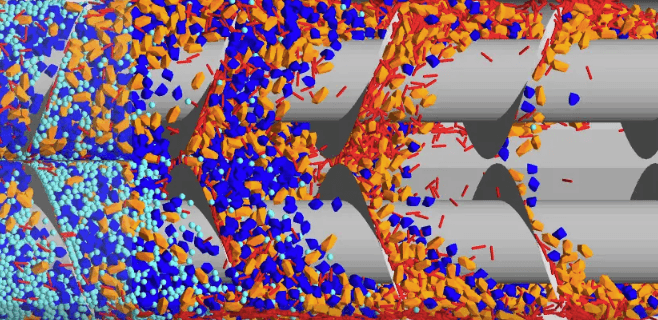
**Discrete Element Modeling (DEM)** is a powerful numerical simulation technique used to analyze the behavior of systems composed of a large number of particles or discrete elements. Unlike traditional continuum-based methods, DEM focuses on individual particles and their interactions, making it especially useful for studying granular materials, powders, soils, rocks, and other particulate systems.
In recent years, DEM has become a cornerstone in engineering, mining, pharmaceuticals, civil engineering, and material science due to its ability to realistically simulate complex particle interactions under various physical conditions.
This article provides a detailed guest post overview of Discrete Element Modeling, its principles, applications, advantages, and key related keywords to help you understand its importance in modern computational modeling.
What is Discrete Element Modeling?
**Discrete Element Modeling** is a computational approach used to simulate the motion and interaction of a large number of particles. Each particle is treated as an independent entity that can move, rotate, collide, and interact with neighboring particles.
The method was first introduced in the late 1970s and has since evolved with advancements in computational power and algorithms.
In DEM simulations, Newton’s laws of motion are applied to each particle, and contact forces such as normal force, tangential force, friction, and damping are calculated at every time step.
Key Concept:
Instead of treating materials as continuous media (like in Finite Element Method), DEM treats them as **assemblies of discrete particles**.
Core Principles of Discrete Element Modeling
1. Particle Representation
In DEM, materials are represented as a collection of spherical or non-spherical particles. Each particle has properties such as:
* Mass
* Shape
* Density
* Elasticity
* Friction coefficient
2. Contact Mechanics
When particles interact, contact forces are generated. These include:
* Normal contact force (compression or tension)
* Tangential force (friction)
* Rolling resistance
* Cohesive forces (in some models)
3. Motion Laws
The motion of particles is governed by Newton’s second law:
* Translational motion: F = ma
* Rotational motion: Torque = Iα
4. Time Stepping
DEM simulations use very small time steps to ensure accurate tracking of particle collisions and interactions.
Key Features of Discrete Element Modeling
Some of the most important features of DEM include:
* Ability to simulate large numbers of particles
* Realistic modeling of particle breakage and deformation
* Accurate representation of frictional and cohesive behavior
* Dynamic simulation of granular flow and mixing
* Visualization of particle-scale interactions
These features make DEM highly valuable in both research and industrial applications.
Applications of Discrete Element Modeling
1. Mining and Mineral Processing
DEM is widely used to simulate:
* Crushing and grinding processes
* Ore flow in hoppers and chutes
* Conveyor belt performance
It helps engineers optimize equipment design and reduce energy consumption.
2. Civil Engineering and Geotechnics
In civil engineering, DEM is used to study:
* Soil behavior under load
* Slope stability
* Foundation settlement
* Landslides and rockfalls
This makes it essential for safe infrastructure design.
3. Pharmaceutical Industry
DEM helps in understanding:
* Powder mixing
* Tablet compression
* Granulation processes
It ensures better drug formulation and manufacturing efficiency.
4. Agriculture and Food Processing
Applications include:
* Grain storage and handling
* Food powder mixing
* Bulk material transport
5. Manufacturing and Material Science
DEM is used to study:
* Additive manufacturing processes
* Composite material behavior
* Particle coating and surface interaction
Advantages of Discrete Element Modeling
1. High Accuracy in Particle Simulation
DEM provides detailed insight into particle-level interactions that are not possible with continuum methods.
2. Flexibility in Material Types
It can simulate a wide range of materials including:
* Granular solids
* Powders
* Rocks
* Biological particles
3. Improved Design Optimization
Engineers can test multiple design scenarios virtually before physical implementation.
4. Visualization of Complex Processes
DEM offers clear visualization of particle movement, collisions, and flow behavior.
Limitations of Discrete Element Modeling
Despite its advantages, DEM also has some limitations:
* High computational cost for large systems
* Requires significant processing power
* Calibration of material parameters can be complex
* Simulation time can be long for industrial-scale problems
Researchers often combine DEM with other methods like Finite Element Method (FEM) or Computational Fluid Dynamics (CFD) to overcome these limitations.
See also: The Importance of Surveillance Systems in Business Security
Key Keywords Related to Discrete Element Modeling
To better understand and optimize content around DEM, here are some relevant keywords:
* Particle simulation
* Granular flow modeling
* Contact mechanics
* Numerical modeling techniques
* Computational mechanics
* Bulk material handling
* Discrete particle method
* Engineering simulation software
* Micromechanical modeling
* Powder technology simulation
These keywords are commonly used in research papers, engineering documentation, and industrial applications.
Software Used in Discrete Element Modeling
Several advanced software packages are used for DEM simulations, including:
* EDEM
* LIGGGHTS
* PFC (Particle Flow Code)
* Rocky DEM
* Abaqus (with DEM modules)
These tools allow engineers and researchers to perform highly detailed simulations with customizable parameters.
Future of Discrete Element Modeling
The future of **Discrete Element Modeling** looks promising with continuous advancements in computing technology, artificial intelligence, and machine learning.
Some emerging trends include:
* Integration of AI for parameter calibration
* Hybrid modeling (DEM + CFD + FEM)
* Real-time simulation capabilities
* Cloud-based simulation platforms
* Improved modeling of complex particle shapes
These advancements will make DEM faster, more accurate, and more accessible across industries.
Conclusion
**Discrete Element Modeling (DEM)** is a vital computational technique that has revolutionized the way engineers and scientists study particle-based systems. By simulating individual particle interactions, DEM provides deep insights into granular behavior, material flow, and mechanical performance.
From mining and pharmaceuticals to civil engineering and manufacturing, DEM continues to play a critical role in optimizing processes, improving safety, and enhancing efficiency.
As computational power continues to grow, Discrete Element Modeling will become even more powerful, enabling more accurate and large-scale simulations than ever before.