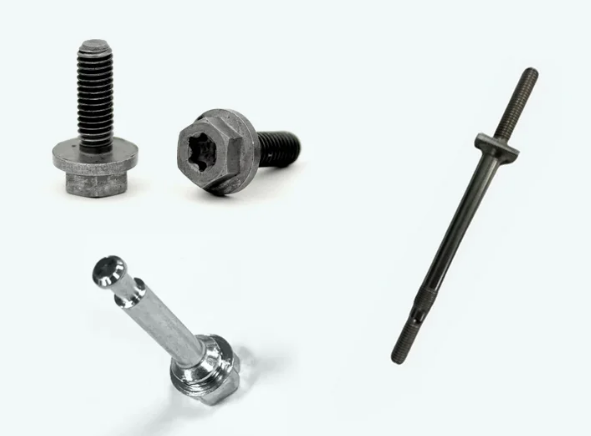
If you design joints for heavy machinery, steel structures or commercial vehicles, then each fastener has to handle far more than a simple static load. High tensile strength bolts carry clamping force, vibration and changing service loads together, so the right bolt for one connection can differ from the right bolt for the next.
Selected around the real demands of the joint, high tensile strength bolts give engineers precise control over preload, strength and long-term behaviour. That selection covers property class, tightening method, grip length and thread engagement. Keep on reading to know more about how each factor helps a heavy-duty connection perform consistently in service.
Real Joint Demands Should Guide Bolt Selection
Clamping Force Carries the Load: In a preloaded joint, the bolt clamps the components firmly together, so the external load is shared between the bolt and the clamped parts. This is why preload matters as much as rated strength. So, high tensile strength bolts are best selected around the actual loads, vibration and temperatures which the connection will see.
Early Selection Keeps Options Open: Bolt selection is easiest while hole sizes, plate thicknesses and tapped depths are still on the drawing board. If it waits until parts are machined, then grip length and thread engagement are largely fixed and the choices narrow. In everyday assembly practice, engineers often find that joints designed around real loads hold their preload well in service.
See also: Regain Control of Your Life With Drug Addiction Treatment
Grades 8.8, 10.9 and 12.9 Offer Different Strength Profiles
Reading the Property Class: Under ISO 898-1, the first number of a property class multiplied by 100 gives the nominal tensile strength in megapascals, and the second gives the yield-to-tensile ratio. Class 8.8 is therefore rated at 800 MPa, while 10.9 and 12.9 reach 1,000 and 1,200 MPa. Higher classes allow more preload from the same bolt size.
Matching the Grade to the Joint: The strongest property class is the right choice only when the joint needs its extra preload and the surrounding parts can support it. Class 8.8 offers greater ductility and suits many structural and machinery joints. Class 12.9 allows compact, highly loaded joints and usually pairs with matching nuts, hardened washers and coatings suited to high-strength steel.
Tightening Method and Proof Load Guide Preload
Torque, Angle and Tension Methods: Torque tightening is quick and widely used, although friction in the threads and under the head takes up most of the applied torque, so preload varies from bolt to bolt. Torque-angle and hydraulic tensioning methods give closer control. Where preload has to be confirmed, ultrasonic testing measures bolt elongation directly and gives a more precise reading.
Proof Load Sets the Tightening Ceiling: Proof load is the tensile load which a bolt can carry with no permanent stretch, and ISO 898-1 specifies it for each property class. Preload targets are usually set as a proportion of this value, so the bolt stays within its elastic range. That margin lets the joint take service loads and recover its clamping force.
Grip Length and Thread Engagement Keep Preload Steady
Longer Grips Store More Stretch: A longer grip length lets the bolt stretch further for the same preload, which helps the joint hold its clamping force. Within its elastic range, a bolt follows Hooke’s law and behaves like a stiff spring. Small amounts of settling at the joint faces then take away a smaller share of preload.
Thread Engagement in Tapped Holes: Adequate thread engagement lets the bolt, rather than the internal thread, set the strength of the connection. A standard nut of the matching property class provides this in steel assemblies. Tapped holes in aluminium or cast iron usually need a longer engagement, so the drawing should state the required depth clearly.
Application-Specific Selection Pays Back over Time
Balancing Strength, Preload and Conditions: Application-specific selection weighs strength, preload, material and operating conditions together. A joint exposed to moisture may suit a coated 10.9 bolt, while a high-temperature assembly may call for a heat-resistant alloy steel. If vibration is strong, then a longer grip and controlled tightening probably add more security than a higher grade alone.
Long-Term Value from Custom Specifications: Bolts matched to their joint keep clamping force steady, which supports longer inspection intervals and predictable maintenance. Custom high tensile strength bolts made to given drawings let engineers specify the exact grip, thread length and head form which the design needs. Over the life of heavy equipment, this consistency probably means more uptime and simpler service planning.
A Selection Checklist for Heavy-Duty Bolted Joints
Details to Confirm before Ordering: A complete bolt specification states every property which affects how the joint is tightened and how it performs in service. Once these details are confirmed, high tensile strength bolts arrive ready to install and suit the design loads of the connection. The points below cover what engineers and buyers most often check.
- Property class should follow the actual joint load and the clamped materials.
- Nuts and washers should match the bolt’s property class.
- Tightening method and preload target belong on the assembly drawing.
- Grip length and thread engagement depth should suit the joint design.
- Coating choice should suit both the environment and the steel grade.
Well-Chosen Bolts Keep Heavy Connections under Control
The right grade, preload and grip give your heavy-duty joints steady clamping force and dependable performance through long service. Settling the specification now is simpler than revisiting machined parts later. Get in touch with a precision fastener manufacturer today to discuss the property class, dimensions and tightening needs of your next connection.